
Markets get a reminder that central banks still matter.
The past week served up a familiar reminder that the path ahead for interest rates matters greatly to financial markets. Equity markets had been supported by exceptional corporate earnings, continuing excitement around artificial intelligence, and hopes that inflation was gradually cooling. But a combination of stronger economic data, firmer energy prices, and central-bank signalling pushed the old interest rate slogan “higher for longer” back into the spotlight.
The main European talking point is the European Central Bank (ECB). A rate rise this week now looks highly probable, with markets and economists expecting a quarter-point increase. The logic is not especially complicated: eurozone inflation has moved the wrong way. August inflation rose to 3.3%, pushed by higher energy costs, while the region remains acutely exposed to oil and gas disruption because it imports so much of its energy needs. The continued conflict in the Middle East, together with concerns around crude oil, refined products and natural gas supply, has made policymakers nervous that a temporary energy shock could start leaking into broader prices.
For investors, it means European government bonds, banks and rate-sensitive equity sectors are all likely to move on the tone of Christine Lagarde’s formal press conference as much as on the rate rise itself.
In the US, the mood also shifted after Friday’s jobs report. Nonfarm payrolls rose by 162,000 in August, well ahead of forecasts of around 55,000, while unemployment held steady at 4.1%. At first glance, that sounds like good news, and in many ways it is. A resilient labour market supports consumer spending and reduces the risk of recession. But markets are rarely that straightforward. A stronger jobs number also gives the Federal Reserve more room to raise rates again if inflation remains sticky.
The detail was not all restrictive for monetary policy. Wage growth of 3.1% was not especially alarming and is broadly consistent with the Fed’s inflation target. Even so, traders quickly increased the odds of a September move, and short-dated Treasury yields rose as investors reassessed the path for policy. The key now is US inflation data. If consumer and producer prices come in hot, the jobs report will look like permission for the Fed to hike. If inflation is softer, officials still have a credible case for staying on hold.
The broader market signal was mixed rather than negative. Stronger growth supports earnings, but as this week showed, it can also postpone rate cuts or even bring further increases back into play. Precious metals faced similar pressures: gold fell late in the week as the dollar strengthened and US jobs data revived expectations of higher rates, while silver also weakened after a volatile spell. Still, both metals remain integral for us, as the drag from higher yields and a stronger dollar is offset by geopolitical uncertainty, inflation worries and demand for portfolio protection.
Political risk also moved back onto the European agenda after the Alternative for Germany won a historic victory in Saxony-Anhalt overnight, finishing well ahead of Chancellor Friedrich Merz’s conservatives but apparently short of an outright majority. Even if the immediate market reaction is contained, the result may worry investors because it points to a more fragmented German political landscape, with potential implications for fiscal policy, EU cohesion and confidence in Europe’s largest economy.
Looking ahead to this week could be interesting. The ECB meeting is the obvious headline event in Europe, with investors watching for any hint that September’s expected rise might be the last, or whether another move could follow later in the year. In the US, consumer-price and producer-price inflation data will be crucial before the Federal Reserve’s mid-month decision. In plain English, the question is whether last week’s stronger data was just a reassuring sign of resilience, or a reason for central banks to tighten the screws again.
For now, the sensible investment stance is to stay well diversified and alert rather than alarmed. There is still plenty to like: earnings are holding up, the technology theme remains powerful, and recession fears are not dominating the conversation. But markets have had a strong run, September is seasonally the weakest month of the year for share performance, and they remain sensitive to any suggestion that rates may need to rise further. The next few days should tell us whether investors can live with a slightly tougher central-bank message, or whether the recent optimism needs a bit of a breather.
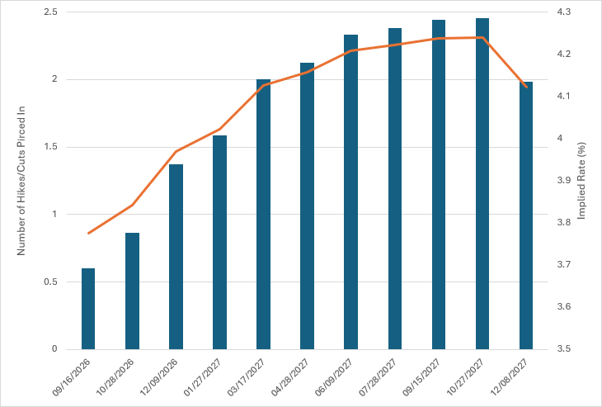
Chart source: Bloomberg
Markets are increasingly pricing in US interest rate rises over the next 12 months, with expectations suggesting two quarter point increases by early 2027.