‘The 3 Ts’
Major American equity indexes drifted lower this week as the ‘3 Ts’, namely Tehran, technology, and tariffs, conspired to keep investors on edge. For much of the Western world, the July and August summer months bring extra holiday cheer and an opportunity to recharge the batteries. Markets typically exhibit reduced trading activity and lighter volumes during these periods, but the drop in participation can also have the undesirable effect of amplifying asset price moves.
The ‘ceasefire’ between America and Iran signed just weeks ago has seemingly been consigned to the scrapheap - for now. US President Trump continued to flex his military might, with targeted, sustained, bombardment across Iranian territory focused on downgrading maritime capabilities, air defence systems, military command centres, and communication networks.
In response, Iran’s Revolutionary Guards (IRG) conducted retaliatory strikes against commercial tankers transiting the Strait of Hormuz and fired on infrastructure in neighbouring Gulf states hosting American forces, including Bahrain and Kuwait. The escalation reached fever pitch by Friday, with Washington threatening strikes against Iranian bridges and power stations, while Iranian officials warned that regional energy infrastructure would remain unsafe without security guarantees.
At the beginning of July, markets were pricing oil at levels that implied a swift return to ‘normal’ commercial traffic volumes in the Strait of Hormuz. Renewed geopolitical escalation has turned that scenario on its head, with the rolling twenty-four-hour count pointing to a renewed collapse in shipping activity. Crude oil finished the week around 7% higher, and investors are now concerned that this may weigh heavily on the minds of Federal Reserve policymakers who meet next week to decide the level of US interest rates.
With little in the way of macroeconomic data releases this week, corporate earnings season remained front and centre as 86 S&P 500 companies announced results and guidance. First, the good news. C-Suite executives are extremely optimistic about business conditions and prospects for the remainder of this year. So much so, that forward guidance is surpassing analysts' expectations by the largest margin ever recorded.
The bad news is that America’s dominant companies continue to aggressively lift planned AI-related capital expenditure (capex) estimates. Tesla sold more cars than ever last quarter (albeit with drastic price cuts and incentives), but raised full-year capex by $5.8 billion, or +142% versus last year. Google is willing to spend between $195-$205 billion on capex in 2026 to pay for soaring chip costs. This will have the crippling impact of turning the company free cash flow negative for the first time in the company’s listed history.
Investors are becoming increasingly sceptical that the future benefits of AI, whilst compelling, will be enough to outweigh the extraordinary sums being deployed to develop the technology. As to what that might mean for investors that are ultimately financing the AI-related infrastructure buildout, perhaps the most interesting development this week occurred in the derivatives market.
The derivatives market is home to the credit default swap (CDS), which is financial jargon for an insurance policy against a borrower defaulting on its debt. A credit default swap spread represents the annual fee an investor pays to a seller in exchange for a payout if the borrower fails to repay its loans. A higher, or wider, spread means the financial market views the borrower as risky, making protection expensive, and vice versa.
This week, the CDS spreads of the most highly leveraged AI companies widened dramatically, but for the first time, the contagion began spreading to the so-called hyperscalers including Alphabet and Amazon. These blue-chip companies, hitherto considered ‘untouchable’ in terms of repeatable business model moats, unparalleled management execution, and profitability, are now showing signs of potential vulnerability. A development worth monitoring.
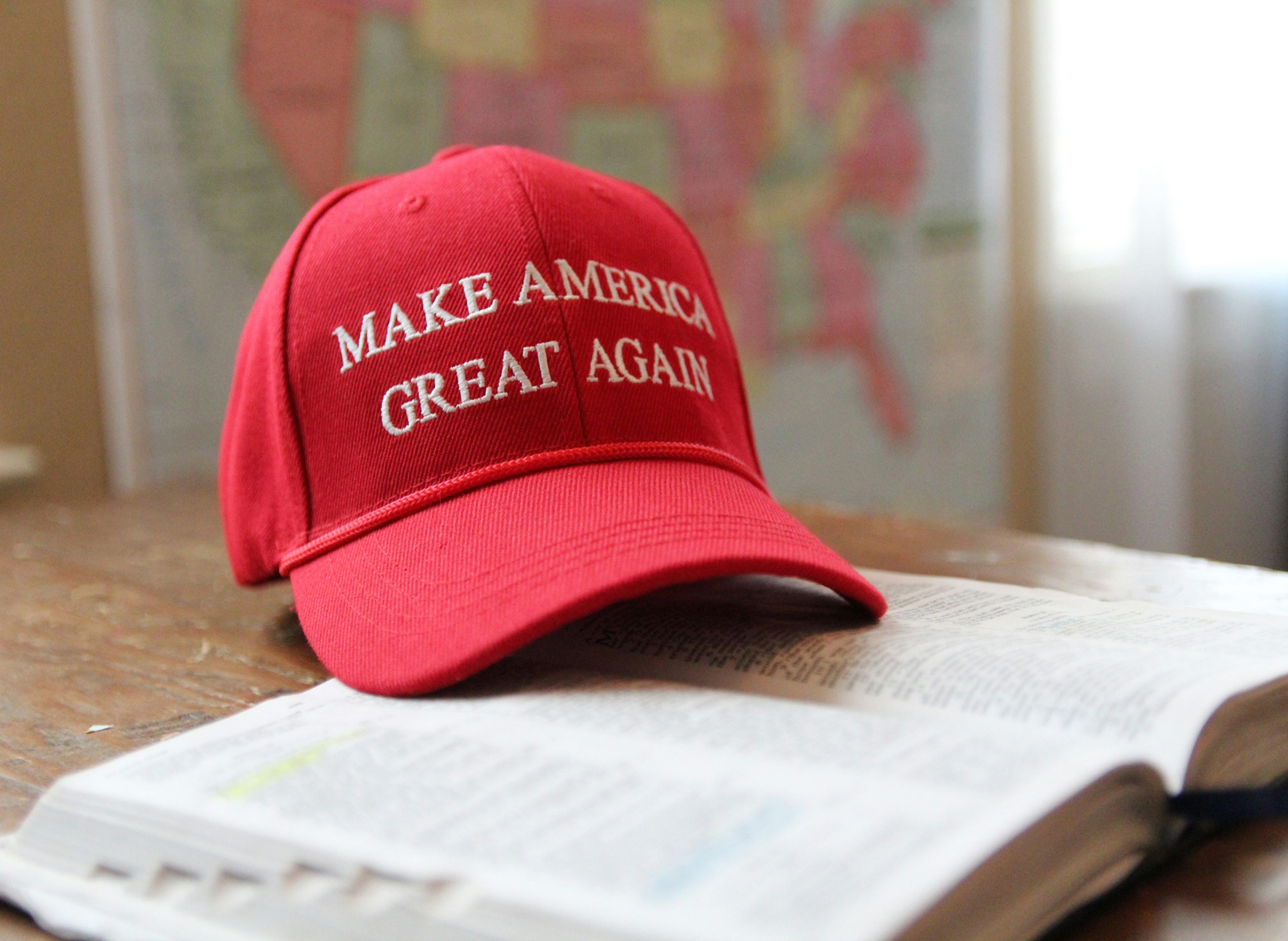
Finally, the Donald dusted off his trusted foreign policy playbook, the ‘Donroe Doctrine’. A new round of tariffs ranging from 10% to 12.5% were announced on over 60 trading partners, including the EU, UK, China, and Canada. The cover for legal justification: forced-labour concerns. Additionally, the MAGA administration announced plans to target select Canadian goods with 50% tariffs starting in August, blaming trade practices in Canada's dairy, alcohol, and auto sectors. Your move, Prime Minster Carney… Never a dull moment!
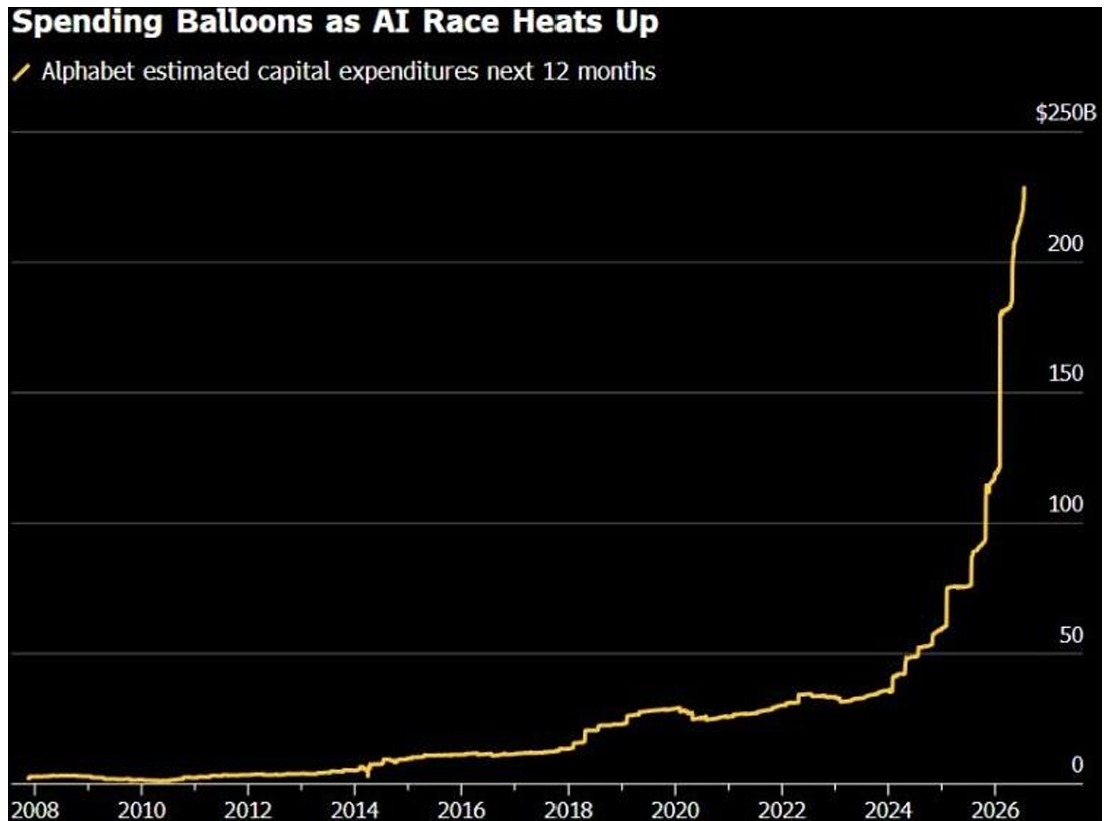 (Source: Bloomberg, Hedgeye)
The chart shows Alphabet's estimated capital expenditures over the next 12 months rising steadily from 2008 through the early 2020s before accelerating dramatically from 2024 onward. Spending increases from relatively modest levels to an estimated over $200 billion by 2026, reflecting a sharp escalation in investment as the AI race intensifies. The steep upward trajectory highlights Alphabet's growing commitment to building AI infrastructure, including data centres, chips, and computing capacity, to remain competitive in the rapidly expanding artificial intelligence market.
Cover Image Source: Natilyn Hicks Photography