
Tech stocks propel S&P 500 to a record high
After enduring a rocky July, US equities started off August on the front foot, posting one of their strongest weekly gains in months as a de-escalation of hostilities between the US and Iran, and a surprisingly weak jobs report, eased the pressure on central banks to hike interest rates.
Brent crude fell more than 7% to $83 a barrel after President cancelled a planned attack on Iran, leading markets to anticipate a possible diplomatic resolution of the conflict and reopening of the Strait of Hormuz.
The expectation was reenforced by Oman stepping forward to mediate directly between the two countries. The Iranian regime said it had reached an understanding with Oman on the geographical coordinates of a shipping route through Hormuz which could lead to an interim 60-day agreement to enable tankers to transit the Strait.
A positive week for stocks was further underpinned by Friday’s release of the nonfarm payrolls report for July. The Bureau for Labor Statistics revealed that 23,000 jobs were lost during the month, versus expectations of a gain of more than 80,000. The figure for June was also revised down sharply.
The data was warmly received by markets as it suggests that the Federal Reserve will adopt a more cautious approach to raising interest rates, despite elevated inflation. The Fed has a dual mandate to target maximum sustainable employment and price stability.
Whilst US and European stocks soared, the FTSE 100 was a notable laggard, eking out a gain of just 0.30% over the week as the share prices of its largest constituents fell.
HSBC, the UK’s most valuable company with a market capitalisation of GBP 262 billion, declined 3% over the week after tax authorities in China announced a crackdown on offshore insurance and overseas investment income, including a 20% income tax on returns form insurance policies issued in Hong Kong.
The policies are a popular method of moving wealth outside of mainland China and are some of the biggest cash cows for financial institutions operating in the territory – Hong Kong insurers, including AIA and Prudential, report a record USD 42 billion in new business from life insurance policies last year.
Shares in AstraZeneca, the UK’s second most valuable company, fell 6% during the week as investors reacted negatively to its proposed merger with US rival Bristol Myers Squibb to create the world’s fourth-largest pharmaceutical company valued at almost USD 400 billion.
The push back reflects concerns over the offer price and strategic rationale of the deal. AstraZeneca already has a strong oncology pipeline and BMS’s assets face pressure from expiring patents and loss of exclusivity on important drugs – BMS is facing the loss of almost half of its revenues as patents expire in the next few years.
It was, however, a much better week for another stalwart of the UK’s blue-chip index, Diageo. Shares in the maker of Guinness and Johnnie Walker gained more than 9% after its new chief executive Sir Dave Lewis revealed plans to transform the business after years of declining profits.
The restructuring plan is centred around USD 1 billion of cost cuts over the next three years, including thousands of job cuts and an overhaul of its supply chain, to drive growth through competitiveness and innovation.
Lewis also plans to take its Guinness brand global and to focus more on affordable brands such as Smirnoff and Captain Morgain. Diageo continues to fight a battle in an industry facing structural headwinds from lower alcohol consumption in younger demographics and the growing popularity of weight-loss drugs which reduce cravings for alcoholic drinks.
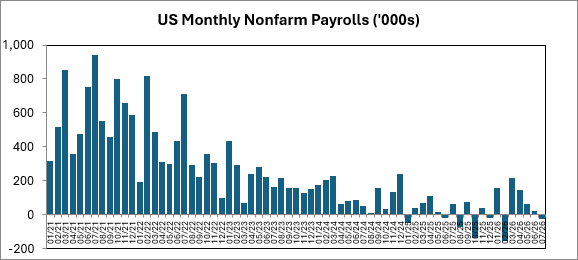
(Source: Bureau of Labor statistics)
US job growth has slowed markedly from the exceptional gains seen earlier in the period. The chart shows nonfarm payroll increases peaking at close to 1 million jobs per month in 2021, as the US economy rebounded strongly from the pandemic. Hiring remained robust through 2022, but the pace gradually moderated, with monthly gains generally falling into the 200,000–400,000 range.
From 2023 onward, the trend became more subdued and volatile. Monthly payroll gains increasingly moved below 200,000, with several months recording relatively small increases and occasional declines. More recent readings point to a much cooler labour market, suggesting that the post-pandemic employment boom has largely faded and that businesses are adding workers at a considerably slower pace.
Overall, the chart illustrates a clear transition from exceptionally strong job creation to a more restrained and uneven US employment environment.